Although in its liquid state LNG is not explosive and cannot ignite, if vaporised and mixed with air LNG becomes combustible; which occurs when LNG leaks from a faulty flange joint, in a pipeline during movements between processing, storage, transportation and regasification. The LNG vaporises rapidly at which point if it reaches a source of ignition could catch fire.
For the marine industry, the 2024 amendments to the IMO IGF Code, the requirement for spray shields on LNG fuel system pipelines is explicitly stated in Part A, Chapter 9 (Fuel Supply Systems), under the provisions for “Protection of piping against leakage.” The Code mandates that all flanged, screwed, or mechanical joints in LNG fuel piping located in enclosed spaces must be fitted with spray shields to prevent fuel leaks from forming hazardous jets or sprays. This requirement is tied to the fundamental safety philosophy of the IGF Code: minimizing ignition risk and protecting personnel and equipment from cryogenic or flammable gas releases.
Chapter 9 – Fuel Supply Systems
Our SUREBAND-STEEL is ideal for LNG applications and we have tens of thousands in service for marine and onshore customers. Whether it be transportation including marine, or gasification / liquefaction facilities, we can help so please get in touch.
For LNG itself, we recommend Sureband Steel
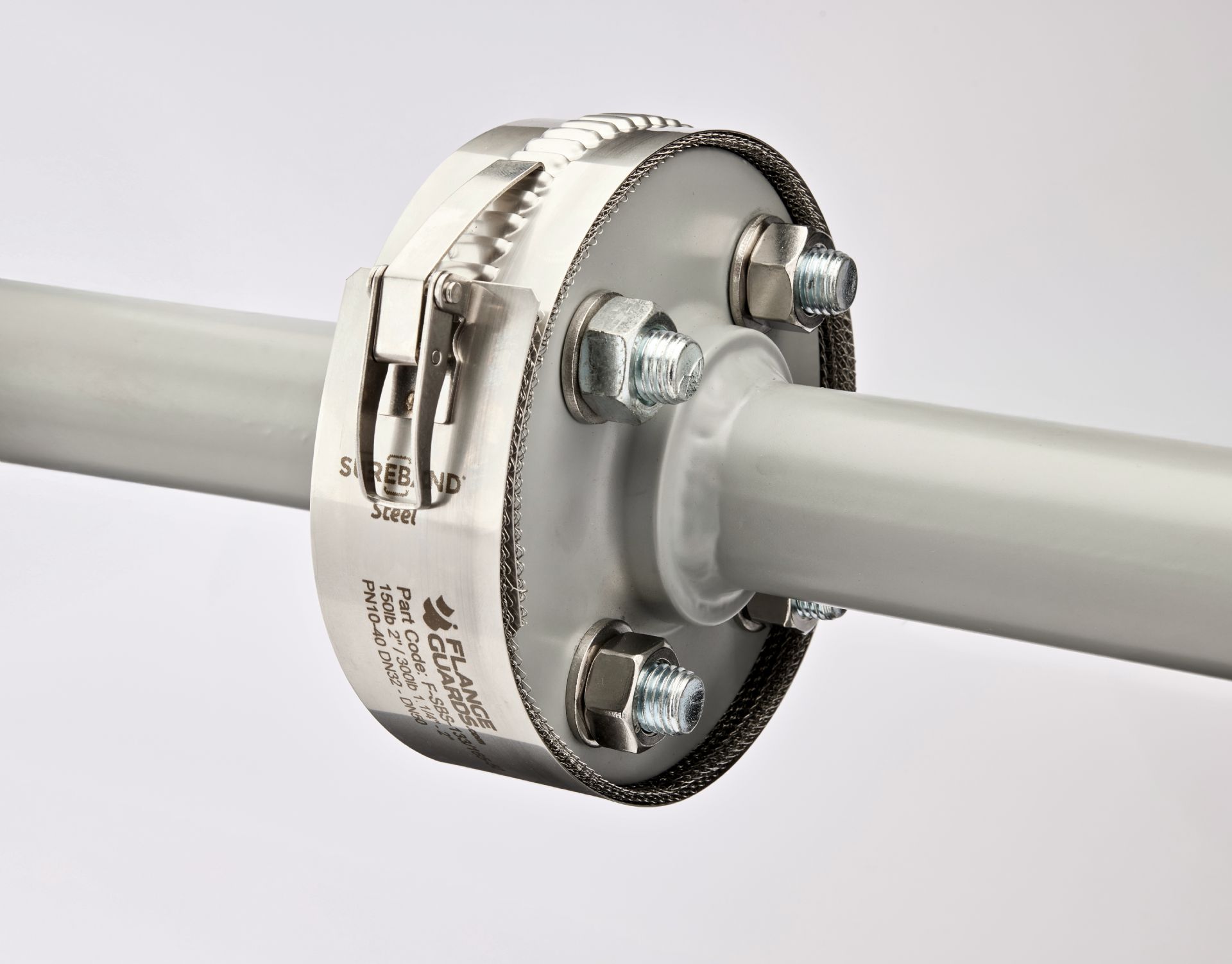
316 STEEL shield with Pressure Diffusion Technology (PDT) incorporating multi-layered steel mesh.
Simple design and quick-connection latch for easy installation.
RECOMMENDED
For other process chemicals, we recommend Sureband Clear
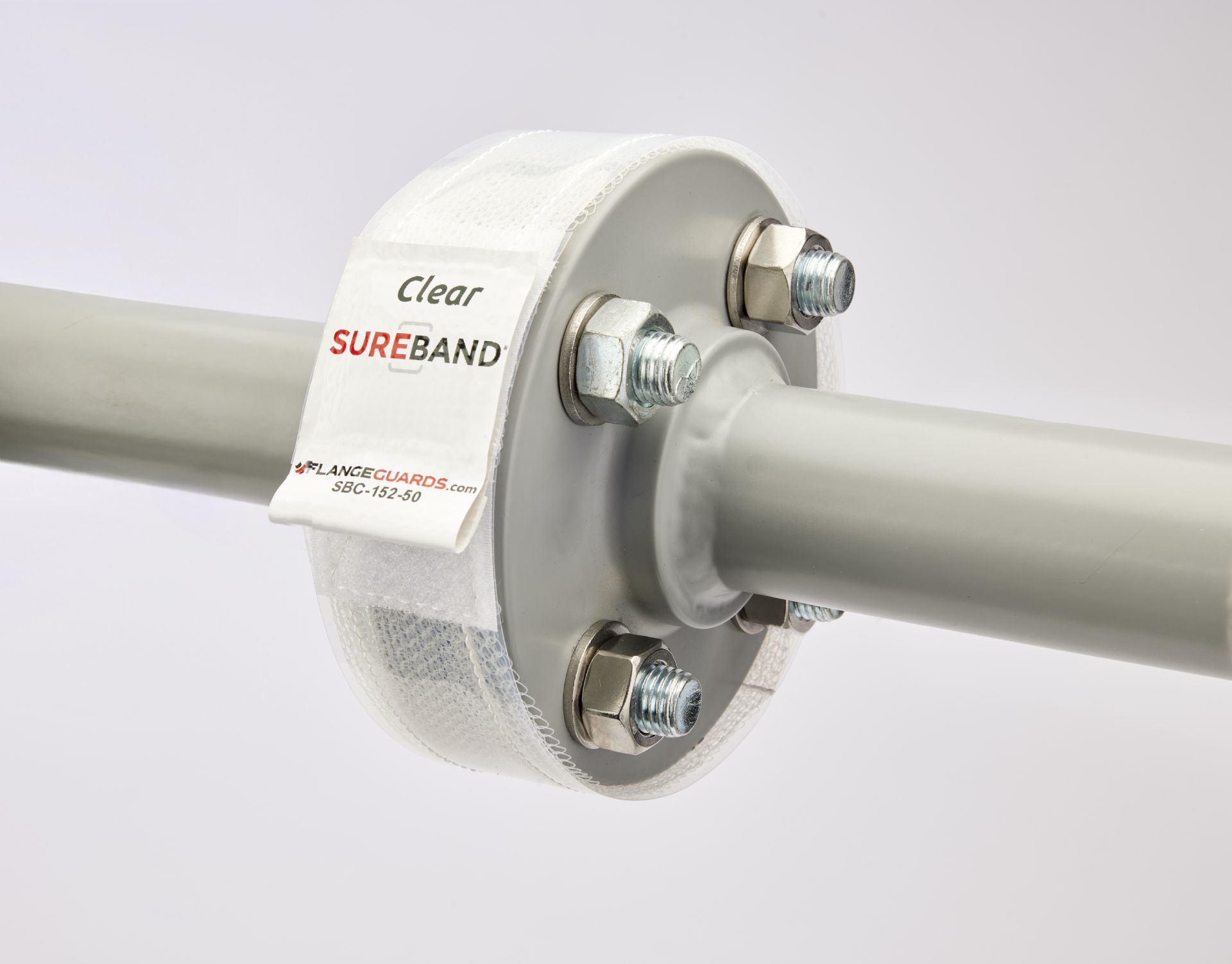
All PTFE shield with Pressure Diffusion Technology (PDT), incorporating multi-layered PTFE mesh.
No pull-cords, quick connection. Litmus indicator patch included.
RECOMMENDED
A Boiling liquid expanding vapor explosion (BLEVE) is an explosion caused by the rupture of a vessel containing a pressurized liquid, which has reached a temperature above its boiling point.[1][2] Because the boiling point of a liquid rises with pressure, the contents of the pressurized vessel can remain a liquid as long as the vessel is intact. If the vessel's integrity is compromised, the loss of pressure drops the boiling point, which causes the liquid to convert to a gas, expanding rapidly. If the gas is combustible, as in the case with hydrocarbons and alcohols, fires break out and cause further damage.
Many such incidents have occurred, with catastrophic results.
Liquified Natural Gas (LNG) projects have numerous applications for safety shields, whether it be the cryogenic LNG process itself or one of the many other chemicals used. Shields are commonly used as one way to mitigate the risk of a BLEVE incident.
The flange joints along the LNG lines themselves need to be shielded to prevent a jet release which would otherwise permit LNG vapour to mix with air and become combustible. This can be done by installing spray safety shields on flange joints stopping the formation of a mist/vapour cloud.
Flangeguards has successfully delivered thousands of safety shields for LNG applications, on projects all around the world. Installation of Sureband Steel spray safety shields to the flanges of pipelines at LNG processing plants and storage facilities control LNG spray out, mitigating risk of fire and explosions.